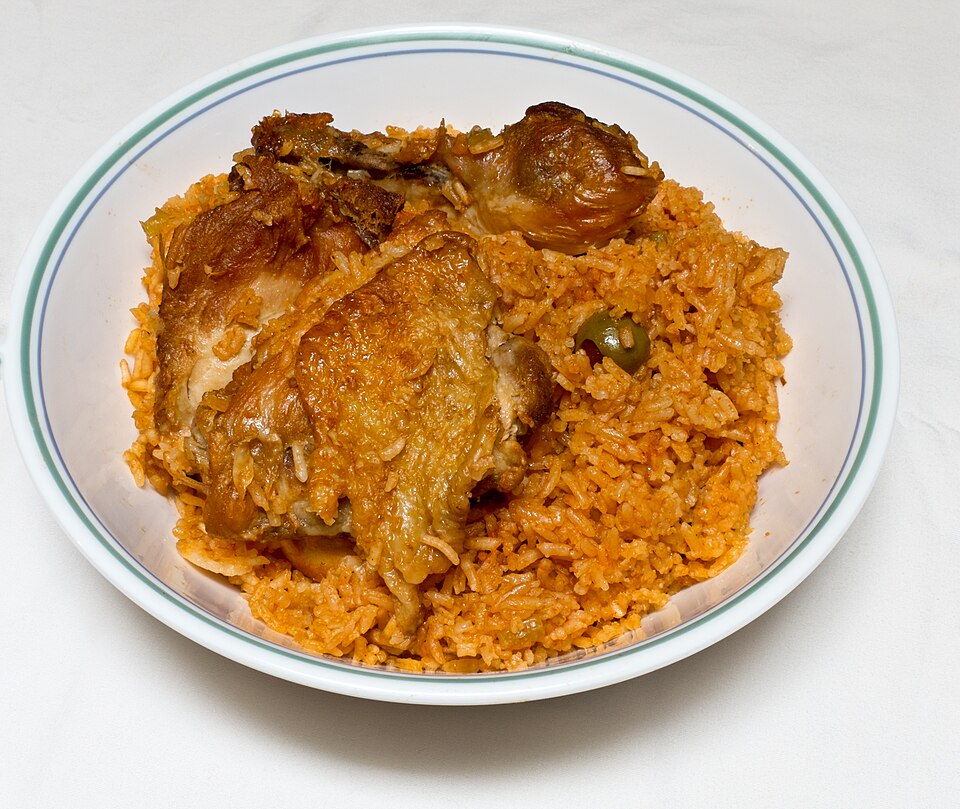
Locrio (Dominican Chicken and Rice)
Heat the ¼ cup oil in a pot over high heat. Add the sugar to the pot. Let it melt and caramelize, turning light brown. Pay close attention and don't let the sugar burn. Do not use…
- Prep
- 53 min
- Cook
- 2 hr 2 min
- Total
- 2 hr 55 min
- Servings
- As written in source
- Difficulty
- Advanced
Timings are approximate — worked out from the method, not measured in a test kitchen.
Ingredients
Quantities are retained as written by the source and do not scale automatically. Tap an ingredient to check it off as you go.
Cooking instructions
Procedure
Heat the ¼ cup oil in a pot over high heat.
Procedure
Add the sugar to the pot. Let it melt and caramelize, turning light brown. Pay close attention and don't let the sugar burn. Do not use plastic utensils to stir the sugar, since it will be at around 350°F (175°C).
Procedure
Add the meat to the caramel and let it brown on all sides. Remove and reserve the meat.
Procedure
Add the garlic, onions, and celery to the pot. Fry.
Procedure
Add rice and cooked meat to pot with the vegetables. Whisk together chicken stock and tomato paste until smooth, then stir it into the rice mixture. Stir in the salt, pepper, thyme, and olives.
Procedure
Check the seasoning. If the salt level is good, add an extra ½ tsp of salt. This is because the rice will absorb some of the salt, and it will come out a bit flat in the end unless you add extra salt.
Procedure
Bring to a boil over high heat. Let it boil, stirring occasionally, until the water is absorbed. The high heat is needed to bring the rice temperature up so that it cooks. If you lower the flame at this point, the rice might not cook all the way.
Procedure
Cover, lower the heat, and let it cook for 15 minutes.
Procedure
Uncover, sprinkle 2 Tbsp oil on top, and stir so that the uncooked rice on top goes to the bottom. Cook for another 5 minutes.
Procedure
If rice still not cooked, give it another stir and cook for another 5 minutes. Sometimes you may need more time; see notes below.
Procedure
Turn heat on high for a couple of minutes to brown and toast the rice on bottom. Sometimes it does this by itself during the main cooking so you don't have to do this. Experience will tell.
Procedure
Serve.
Procedure
Preheat oven to 350°F (125°C).
Procedure
Proceed with the recipe as above, using an oven-proof pot, until the rice absorbs all the liquid. Once this happens, cover the pot, put it in the oven, and bake for 30 minutes.
Procedure
Add 2 tbsp oil, and stir so the uncooked rice is on the bottom and the bottom rice is on the top. Bake for another 20 minutes.
Procedure
Stir. If it is still not fully cooked, bake another 20 minutes.
Procedure
Serve.
Notes, tips, and variations
If the rice doesn't cook but all the water was absorbed, you can separate the rice from the meat, put it in a bowl, and give it 5 minutes on high in the microwave. Often there wasn't enough heat to cook the rice. On some stoves, once covered (as mentioned above), you may have to cook 20 minutes, add oil, stir, and cook another 20–40 minutes, stirring every 10 minutes.
Notes, tips, and variations
It is also helpful to put a sheet or two of aluminium foil over the pot before putting the lid on. That helps seal the lid and keep the heat/steam from escaping, and the rice often comes out better.
Notes, tips, and variations
Dominicans tend to cook the rice on the dry side—the rice will be cooked through, but not too watery. The ratio should be 4 cups rice to 5½ cups liquid (some locrio recipes ask for 7–8 cups of liquid, which makes things mushy). If you have tomato sauce instead of tomato paste, you can use that also, as long as the ratios are the same (e.g. 1 cup tomato sauce to 4½ cups water/stock; which makes a total of 5½ cups liquid). If you halve the recipe, the ratio rice to liquid will be 2 cups rice to 2¾ cups liquid.
Notes, tips, and variations
Some people deep fry the meat separately, remove the excess oil, and then caramelize the sugar.
Notes, tips, and variations
The ingredients of the sofrito vary, and can be made in advance. Some add cilantro, bell peppers, culantro, and other aromatics to it.
Notes, tips, and variations
Other vegetables such as 1 cup of cubed auyama squash are sometimes added with the rice.
Notes, tips, and variations
You can also substitute guineafowl, rabbit, Dominican salami, pork chops, or other meat for the chicken. Almost any meat can be used, including cubed ham or spam, arrenque (smoked dried herring, pre-soaked in warm water to remove some salt, but cut the amount of salt you use), canned sardines, Vienna sausages, shellfish (mariscos) and if in desperation, ground beef, meatballs, hot dogs, etc. can also be used. You can use 2 lbs of chicken gizzards also, but gizzards need to be boiled (or pressure cooked) until tender first.
Notes, tips, and variations
Some people use Sazón Completo for the seasoning. Although it is not authentic, you can also add 1 tsp ajinomoto (味の素), which is similar.
Notes, tips, and variations
You can take the skin off the chicken before frying it.
Notes, tips, and variations
Instead of chicken stock, some people throw in a stock cube.
Photo: Ll1324 · CC0 · http://creativecommons.org/publicdomain/zero/1.0/deed.en · Photo source and licence
Wikibooks contributors · CC BY-SA 4.0 · https://creativecommons.org/licenses/by-sa/4.0/ · Adapted; quantities retained as written. · Original source
Read it through first
Skim all 27 steps before you start — it is the difference between cooking and firefighting.
Scale it
Use the quantities listed in the original recipe. Adjust them manually if making a different batch size.
Storage
Cool completely, then keep in an airtight container in the fridge for up to three days.
Reheating
Reheat gently with a splash of water in a covered pan, rather than blasting it, so nothing dries out.
Approximate values per serving. Worked out from the ingredient list — treat them as a guide, not a measurement.
Reviews
No reviews yet. If you cook this, come back and tell everyone how it went.