Figolli (Maltese Easter Pastries)
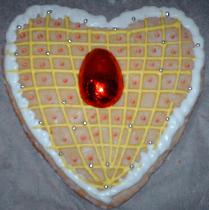
Figolli (singular Figolla) are the typical Maltese sweet for Easter. They are prepared in batches and given as gifts to friends and family. The shape of the Figolla is traditionally an Easter related figure, but today one can buy commercially produced figolli in all shapes. See below for how to get the right shapes. This recipe is for preparing plain figolli, but they should always be decorated with either a chocolate covering or, more typically, with decorative icing.
- Prep
- 23 min
- Cook
- 55 min
- Total
- 1 hr 18 min
- Servings
- As written in source
- Difficulty
- Advanced
Timings are approximate — worked out from the method, not measured in a test kitchen.
Ingredients
Quantities are retained as written by the source and do not scale automatically. Tap an ingredient to check it off as you go.
Cooking instructions
Procedure
Sift the flour into a bowl, and rub in the margarine until the mixture returns to a powdery consistency.
Procedure
In a separate container, mix the eggs and sugar until well blended.
Procedure
Mix the orange zest into the egg and sugar.
Procedure
Fold the egg mixture into the flour mixture.
Procedure
If necessary mix in some water to help the mixture form a dough. Add the water very carefully, drop by drop, as you will only need a little bit, and too much will ruin the pastry.
Procedure
In a small skillet, gently heat the water and dissolve all the sugar into it.
Procedure
Once the sugar has completely dissolved, bring the water to the boil, and immediately remove from the heat.
Procedure
Stir the ground almonds into the hot sugar solution. Mix well until you get a paste-like filling.
Procedure
Flour a clean surface, and roll out about a quarter of the dough with a rolling pin.
Procedure
Cut two identical figolli shapes (see image) from the dough and remove the excess.
Procedure
Spread about a quarter of the filling on one of the shapes. Leave a 1–2 cm border without any filling on it.
Procedure
Place the second identical shape on top of the first, making sure to align both shapes properly.
Procedure
Press the edges of the two pieces of dough all around so they seal. Wetting the fingers with some cold water can help if the 2 layers are difficult to combine.
Procedure
Repeat the above steps for the other 3 figolli.
Procedure
To bake, preheat the oven to 190 °C. Place double layer of baking paper on a baking tray, and place the figolli gently on paper.
Procedure
Bake in the preheated oven until the top turns golden and the edges start becoming dark (about 30 minutes).
Notes, tips, and variations
To get the right shapes, you should use metal cut-out templates that are like cookie cutters but larger. Alternatively, a printable template is available. Print the picture on an A4 sheet of paper, then cut the shape with scissors. Stack 3–4 sheets of paper and glue them together for stiffness, or print on cardboard if your printer allows it. Place the cut-out on the pastry and follow it with the end of a very sharp pointed knife. While this will not give the finest results, the traditional Maltese figolla is expected to be modest in appearance, and only factory-produced ones are regularly shaped.
Notes, tips, and variations
These shapes are a rather small size of figgola, so with the above quantities your figolli might turn out a bit on the fat side compares to what is typical. On the other hand, the larger the ratio of filling to pastry the more tasty the figolla tends to be.
Photo: Silverlining at English Wikipedia · Public domain · · Photo source and licence
Wikibooks contributors · CC BY-SA 4.0 · https://creativecommons.org/licenses/by-sa/4.0/ · Adapted; quantities retained as written. · Original source
Read it through first
Skim all 18 steps before you start — it is the difference between cooking and firefighting.
Scale it
Use the quantities listed in the original recipe. Adjust them manually if making a different batch size.
Storage
Cool completely, then keep in an airtight container in the fridge for up to three days.
Reheating
Reheat gently with a splash of water in a covered pan, rather than blasting it, so nothing dries out.
Approximate values per serving. Worked out from the ingredient list — treat them as a guide, not a measurement.
Reviews
No reviews yet. If you cook this, come back and tell everyone how it went.