Cake Pan Goop
Cake goop, also called pan release, is an alternative to greasing and flouring cake pans, or buying commercial sprays. It is particularly useful for Bundt pans and other complex shapes.
- Prep
- 9 min
- Cook
- 1 hr 18 min
- Total
- 1 hr 27 min
- Servings
- As written in source
- Difficulty
- Medium
Timings are approximate — worked out from the method, not measured in a test kitchen.
Ingredients
Quantities are retained as written by the source and do not scale automatically. Tap an ingredient to check it off as you go.
Cooking instructions
Procedure
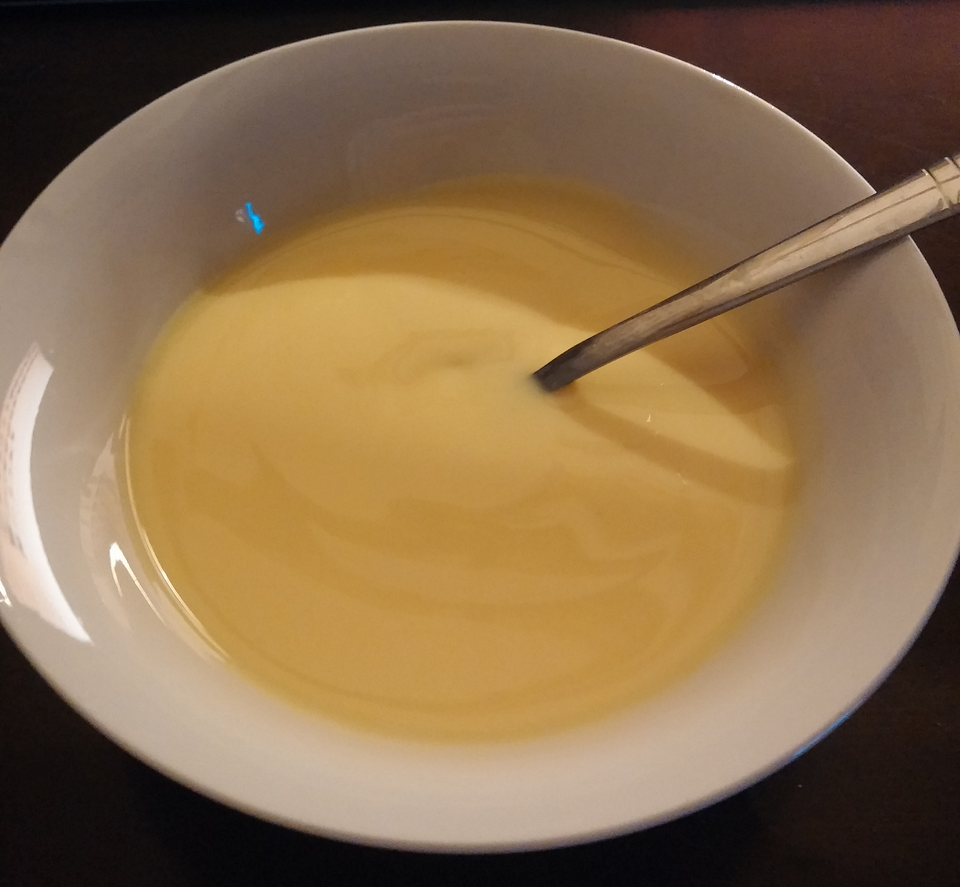
Stir together the oil and shortening. This can be done with a spoon, a whisk, or an electric mixer.
Procedure
Add the flour and stir until mostly smooth. Don't worry about trying to get every little lump out.
Procedure
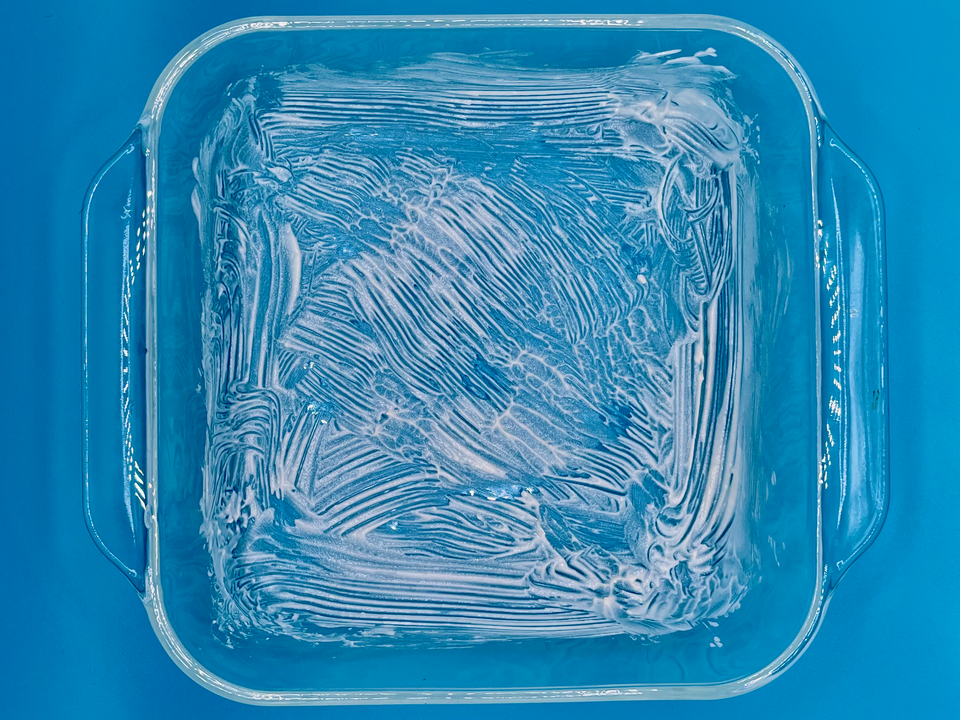
When a recipe says to prepare the cake pan by greasing and flouring it, or by spraying it with a cooking spray containing flour, instead use a brush to spread a thin layer of cake goop on the bottom and sides of the pan. If the pan has intricate details, be sure that the goop has gotten into the crevices. Then, pour in the cake batter, and bake as usual.
Notes, tips, and variations
Cake goop can be stored in an airtight jar or container at room temperature for months, and in the refrigerator for at least six months. It can even be frozen, which is convenient if you want to make one batch, divide it up (e.g., in an ice cube tray), and then thaw smaller amounts as needed. It's easier to use if it's not cold.
Notes, tips, and variations
If it separates while it sits, just stir it again.
Notes, tips, and variations
If you use too much, it can actually make the cake stick. For a small pan, you will use about 1 tablespoon (15 ml) each time.
Notes, tips, and variations
Very large cakes and cakes with very high amounts of sugar usually do better with parchment baking paper than with any kind of grease-and-flour approach, including this one. For example, for a 12-inch (30 cm) round cake, the best approach is to line the bottom of the pan with parchment and then use cake goop on the sides. A bit of cake goop can be used under the parchment to stick it in place.
Notes, tips, and variations
Gluten-free flour substitutes can be used in this recipe. However, you may want to make and test a small amount with your preferred flour substitute, to see whether that particular blend of flours is compatible.
Notes, tips, and variations
Butter can be used instead of the shortening. However, it must be stored in the refrigerator, and the shelf life is reduced to the shelf life of your butter (usually three months or less).
Notes, tips, and variations
Unsweetened cocoa powder can be substituted for up to half of the flour. Sift (or at least stir) the cocoa and flour together before adding. This is handy if you are baking a chocolate cake and don't want to risk having any flour-colored streaks on the edges.
Photo: WhatamIdoing · CC BY 4.0 · https://creativecommons.org/licenses/by/4.0 · Photo source and licence
Wikibooks contributors · CC BY-SA 4.0 · https://creativecommons.org/licenses/by-sa/4.0/ · Adapted; quantities retained as written. · Original source
Read it through first
Skim all 10 steps before you start — it is the difference between cooking and firefighting.
Scale it
Use the quantities listed in the original recipe. Adjust them manually if making a different batch size.
Storage
Cool completely, then keep in an airtight container in the fridge for up to three days.
Reheating
Reheat gently with a splash of water in a covered pan, rather than blasting it, so nothing dries out.
Nutrition information is not available for this recipe yet.
Reviews
No reviews yet. If you cook this, come back and tell everyone how it went.