Bibimbap
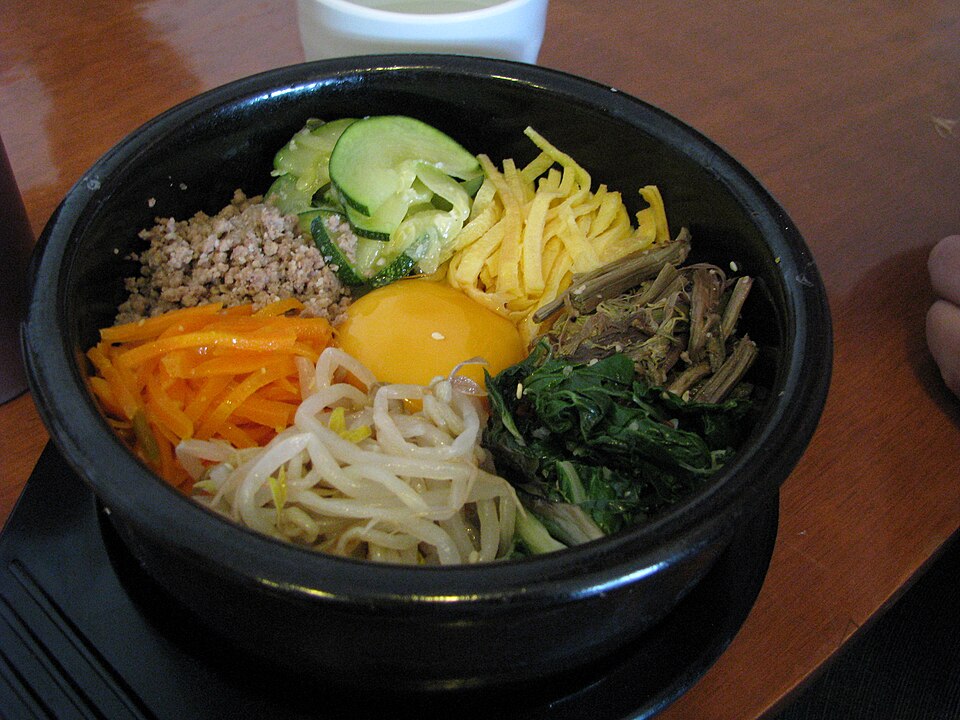
Bibimbap (also called Bibimba or Bibimbop) is a typical Korean meal that literally means "mixed rice". The meal consists of a bowl of steamed white rice topped with vegetables, beef (sometimes tofu or chicken to suit tastes), a whole egg, and gochujang (Korean chili pepper paste). Gochujang is usually served separately to control the spiciness of the dish. It is often made vegetarian by substituting tofu for beef. Dolsot Bibimbap is a variation where the dish is served in a very hot stoneware bo
- Prep
- 30 min
- Cook
- 2 hr 6 min
- Total
- 2 hr 36 min
- Servings
- As written in source
- Difficulty
- Advanced
Timings are approximate — worked out from the method, not measured in a test kitchen.
Ingredients
Quantities are retained as written by the source and do not scale automatically. Tap an ingredient to check it off as you go.
Cooking instructions
Procedure
Cut the carrots into matchsticks.
Procedure
Boil matchsticks in a covered pot of salted water for a few minutes. Drain.
Procedure
Rinse carrots with cold water until cool. Drain again, then put in a bowl.
Procedure
Add the sesame oil, ground sesame seeds, grated garlic, and salt. Toss together with your fingers.
Procedure
Put the spinach in a large covered pot with 1 inch of water.
Procedure
Bring to a boil and cook as usual. Stir occasionally to keep the spinach from sticking to the pot. The spinach is done when it's dark green and reduced to a small fraction of its original volume.
Procedure
Drain the cooked spinach. Cool by adding cold water to the pot and drain again. Squeeze the spinach in your hands to remove the water.
Procedure
Slice the cooked spinach into 1-inch pieces.
Procedure
Put the cooked spinach in a bowl with the sesame oil, ground sesame seeds, and grated garlic. Mix with your fingers.
Procedure
Blanch the bean sprouts in a pot of salted water until they become clear.
Procedure
Drain the cooked sprouts, and transfer to a bowl.
Procedure
Toss with sesame oil, ground sesame seeds, grated garlic, and salt.
Procedure
Slice the steak thinly, but not paper-thin.
Procedure
Heat the oil in a large frying pan on high heat. When the oil is hot, but not smoking, add the beef. Stir-fry.
Procedure
While the beef is cooking, add the sesame oil, ground sesame seeds, and grated garlic. Cook until the meat is well browned.
Procedure
Add the soy sauce. Continue cooking until the liquid has boiled off.
Procedure
Place rice in each bowl.
Procedure
Arrange the prepared namuls, beef soboro, cucumbers, and egg on top of the rice. They should be arranged separately and attractively. The egg sits in the middle. Gochujang, kimchi, and any other root or leafy vegetable is served on the side in small individual bowls for the table to help themselves.
Procedure
If using dolsots (Korean stoneware bowls) to serve your bibimbap, the preparation is slightly different:
Procedure
Rub the inside of the dolsots with sesame oil.
Procedure
Spread the cooked rice evenly over the bottom of the dolsots and part way up the sides. Place the namurus and the beef soboro on top of the rice, each in its own area.
Procedure
Cover the dolsots and cook over medium-high heat. Watch carefully near the end to avoid burning the rice on the bottom. To test, use a spoon to scrape the rice from the side. Remember that the bottom cooks more than the sides and that the rice keeps cooking after you remove it from the heat. Do not preheat the dolsots.
Procedure
Add an uncooked egg to the middle of each dolsot.
Procedure
Serve dolsots on small pieces of wood to keep the heat from damaging the table.
Procedure
To eat, start by scraping the rice from the bottom and stirring the ingredients together with a metal spoon. The egg will cook as it breaks up. The rice on the bottom will be crunchy and sometimes hard to remove unless you continue stirring as you eat.
Notes, tips, and variations
Sesame seeds expand when ground; 2 or 3 tablespoons of sesame seeds will make ¼ cup of ground sesame seeds.
Notes, tips, and variations
Vegetables that can be served on the side (in small individual bowls) include lettuce, shiitake mushrooms, doraji namul, kong namul, gaji namul, sukju namul, gosari namul, and hobak namul. Other ingredients like dried sesame seeds and gim (seaweed) are added to the mix at varying times, depending on personal taste.
Photo: Jerine Lay · CC BY 2.0 · https://creativecommons.org/licenses/by/2.0 · Photo source and licence
Wikibooks contributors · CC BY-SA 4.0 · https://creativecommons.org/licenses/by-sa/4.0/ · Adapted; quantities retained as written. · Original source
Read it through first
Skim all 27 steps before you start — it is the difference between cooking and firefighting.
Scale it
Use the quantities listed in the original recipe. Adjust them manually if making a different batch size.
Storage
Cool completely, then keep in an airtight container in the fridge for up to three days.
Reheating
Reheat gently with a splash of water in a covered pan, rather than blasting it, so nothing dries out.
Nutrition information is not available for this recipe yet.
Reviews
No reviews yet. If you cook this, come back and tell everyone how it went.