Baozi (Steamed Yeasted Dumplings)
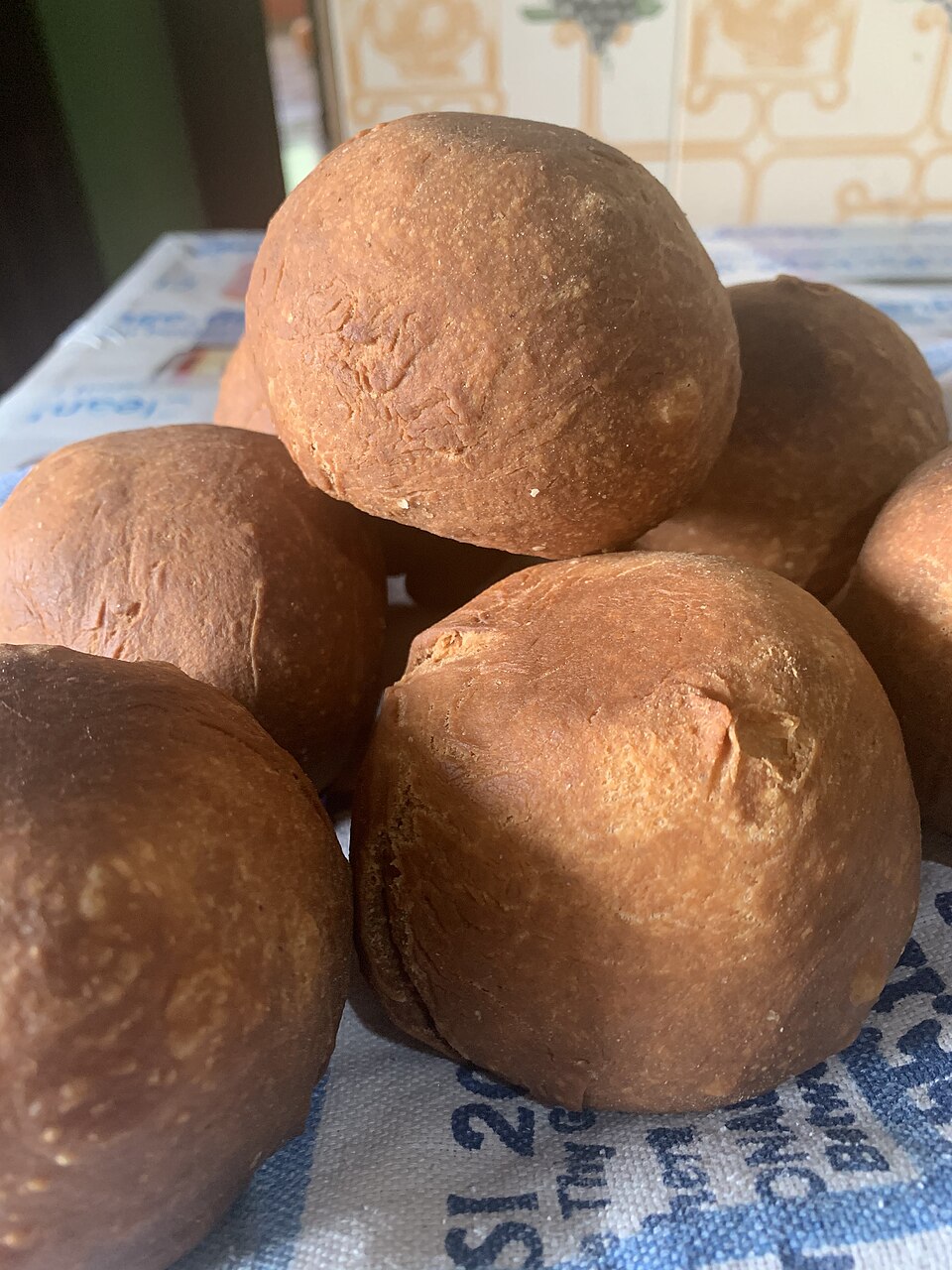
A baozi, also known as bao or bau, is a type of steamed, filled bun or bread-like item in Chinese cuisine. In its bun-like aspect it is very similar to the traditional Chinese mantou, but baozi has filling. It can be filled with meat or vegetarian fillings, and used as an alternative to rice or noodles. It can be eaten at any meal in Chinese culture, and is often eaten for breakfast.
- Prep
- 1 hr 3 min
- Cook
- 2 hr 27 min
- Total
- 3 hr 30 min
- Servings
- As written in source
- Difficulty
- Advanced
Timings are approximate — worked out from the method, not measured in a test kitchen.
Ingredients
Quantities are retained as written by the source and do not scale automatically. Tap an ingredient to check it off as you go.
Cooking instructions
Procedure
Stir yeast and 1 tablespoon of sugar into 1 cup of the warm water. Let stand for 15 minutes. Skip this step if your yeast does not need proofing (it will say so on the packet).
Procedure
Sift the flour and sugar together.
Procedure
If you pre-mixed the yeast, add to the flour and the rest of the sugar in a mixing bowl.
Procedure
If you didn't pre-mix the yeast, mix flour, salt if desired, and the sugar, then mix in yeast in a mixing bowl. Add 1 cup of the water in a steady stream, mixing constantly.
Procedure
Mix together. The dough will begin to form a ragged clump. If the dough does not stick together, add a small amount more water.
Procedure
Knead dough for 5–10 minutes. The dough will stiffen, and should spring back slowly when indented with a finger. The surface should be smooth and slightly shiny.
Procedure
Coat the bottom of a large bowl with the sesame oil to give a thin film, and place the dough in the bowl. Roll over so it is coated with the oil.
Procedure
Allow dough to rise and double in volume in a warm place for 1–1½ hours, or in a cool place like a fridge for 2–3 hours. A slow rise in a cool place will produce a finer texture.
Procedure
Punch dough down. If you wish at this point, you can allow it to rise and double again, in a warm or cool place, and punch down again. A double rise also results in a finer, more tender texture.
Procedure
Form into a large pancake shape.
Procedure
Sprinkle the baking powder evenly across the dough, and knead again, until the same consistency as before it rose. Water from the yeast's respiration may have made the dough softer, so add a bit more flour if needed.
Procedure
Divide the dough into two long rolls, and cut each into 6 pieces.
Procedure
Roll each piece of dough into a ball. If you are making plain baozi, go straight to Step 20 now. If making filled baozi, then flatten each ball into a 6-inch (15 cm) disc.
Procedure
Shape the disc so that it is significantly thicker in the centre than at the edges.
Procedure
Position one hand as if you were holding a normal drinking glass, and place a disc of dough over the top.
Procedure
Using two fingers, push the centre of the disc down by about 1 inch (2.5 cm).
Procedure
Place 1 dessert spoon of filling into the well you just made in the dough.
Procedure
Still holding your hand in position, use your other hand to fold the edges of the dough together, in a sort of pleated fashion.
Procedure
Pinch edges together and twist (so that you twist a small portion at the top right off) to close the baozi.
Procedure
Place each baozi on a square of parchment paper, 3 inches (7.5 cm) to a side.
Procedure
Allow to rise in warm place 1 hour. The dough should end up springy to the touch.
Procedure
Place buns in a steamer. Try to position so they do not touch one another. It will almost certainly require several batches to steam all the buns, unless you have lots of steamers, or a very big one. You can put them seam up (opening flower effect) or seam down (smooth, round top).
Procedure
Steam buns over gently boiling water for 10–15 minutes.
Procedure
After this time, remove the pan and steamer from heat, but don't remove the steamer from the pan, or lift the lid of the steamer. By allowing the steam to subside gradually like this, you prevent the dough from collapsing on contact with the cold air.
Procedure
After a few minutes, carefully lift the lid and remove the bun gently from the steamer.
Procedure
When cool enough to handle, remove parchment paper from bottom of buns.
Procedure
Serve warm.
Notes, tips, and variations
Use bleached flour for a whiter bread.
Notes, tips, and variations
The ideal sweetness of the baozi is subjective – in China, they generally get sweeter the further south you go. This recipe is fairly sweet, but can be modified either way.
Notes, tips, and variations
Depending on taste, you can add salt to the dough - ½ tsp. should be sufficient. Remember not to allow concentrated salt to come into contact with the yeast, as it will kill it. Mix the salt with the flour, then add the yeast.
Notes, tips, and variations
Ensure the place used for rising is draft-free. Drafts prevent the dough from rising as much, resulting in a flatter bread.
Notes, tips, and variations
Use flour to keep the dough from sticking to your hands, not oil. This keeps the dough from getting too wet. It is cooked in a damp environment, so you don't want wet dough.
Notes, tips, and variations
Try to keep the dough from drying out and forming a crust when not being worked with. Rise in a covered container (using clingfilm), and cover with a towel when not immediately handling the dough.
Notes, tips, and variations
Add a couple of tablespoons of vinegar to the steaming water to bleach the buns slightly. The vinegar does not significantly affect the taste of the buns.
Notes, tips, and variations
Try to use a bamboo steamer. Although a metal one will suffice, it doesn't impart a subtle flavour to the buns like bamboo, and it won't prevent water from forming on flat surfaces and making soggy patches.
Notes, tips, and variations
Char Siu – Chinese honey roast pork (cha shao, char siu or sometimes "Chinese BBQ")
Notes, tips, and variations
Red Bean Paste – A sweet paste made of azuki beans and sugar
Notes, tips, and variations
Jiu Cai (simplified: 韭菜, Pinyin: jiu3 cai4) – Chinese chives
Notes, tips, and variations
Luobosi (simplified: 萝卜丝, Pinyin: luo2bo si1) – Thinly sliced white radish
Notes, tips, and variations
Xiaolong Bao (小籠包) – "Little dragon" dumplings, one of the most famous fillings, usually soupy with spicy pork. Highly variable depending on region.
Warnings
Keep leftovers refrigerated.
Warnings
To reheat, steam for 10–15 minutes or heat in microwave for 30-45 seconds. Reheating by steaming gives better results.
Conversion notes
↑ Weight conversions from USDA National Nutrient Database. Original recipe text and ingredient order preserved. Water density adjustment for 38°C applied.
Conversion notes
↑ This excessive amount of yeast will result in a strong yeast flavor. To reduce this flavor, it is recommend to use no more than 0.775% instant dry yeast expressed as a baker's %, alternatively, 2.5% cake yeast (compressed) or 1.05% active dry yeast, although in all cases you can expect fermentation time to increase somewhat. Further reductions will result in less yeast flavor and longer bulk fermentation times.
Photo: J. Samuel Burner · CC BY 2.0 · https://creativecommons.org/licenses/by/2.0 · Photo source and licence
Wikibooks contributors · CC BY-SA 4.0 · https://creativecommons.org/licenses/by-sa/4.0/ · Adapted; quantities retained as written. · Original source
Read it through first
Skim all 44 steps before you start — it is the difference between cooking and firefighting.
Scale it
Use the quantities listed in the original recipe. Adjust them manually if making a different batch size.
Storage
Cool completely, then keep in an airtight container in the fridge for up to three days.
Reheating
Reheat gently with a splash of water in a covered pan, rather than blasting it, so nothing dries out.
Approximate values per serving. Worked out from the ingredient list — treat them as a guide, not a measurement.
Reviews
No reviews yet. If you cook this, come back and tell everyone how it went.